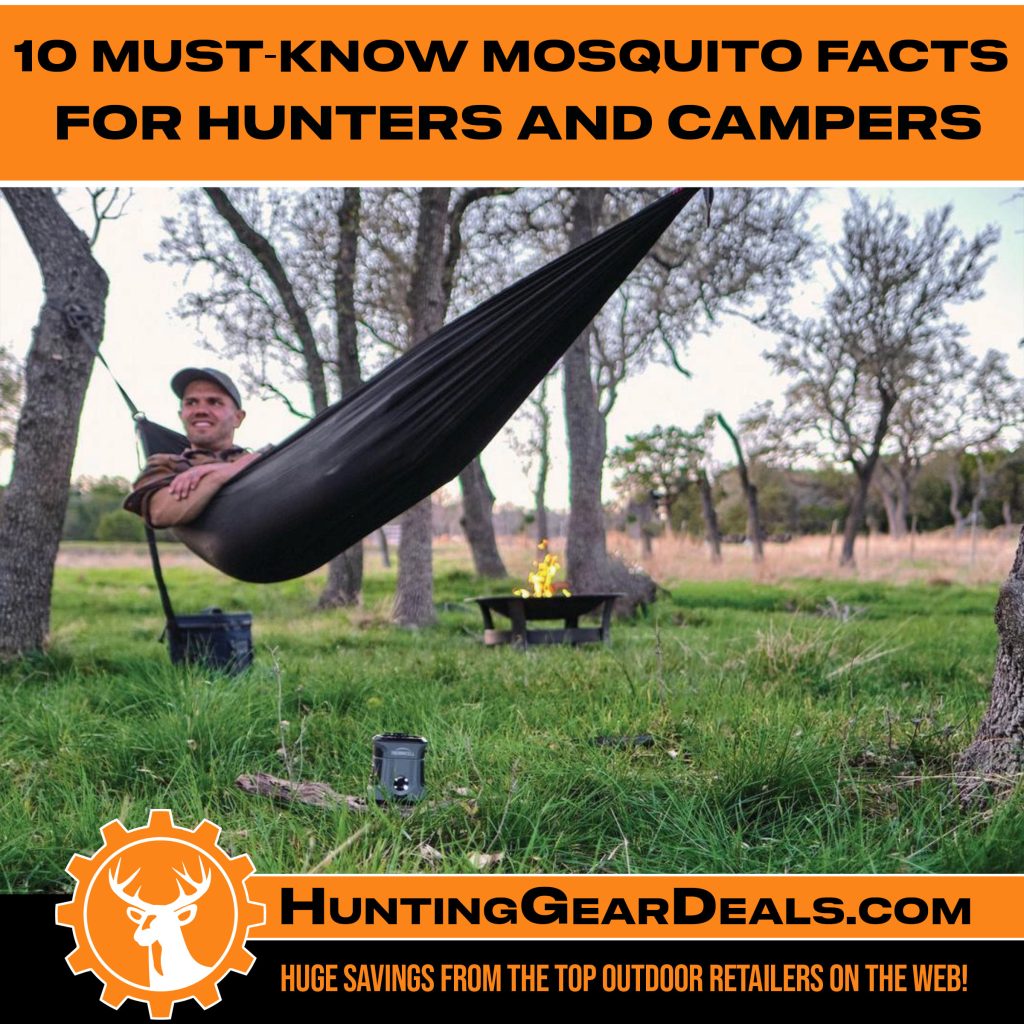
Mosquitoes—those buzzing, bloodthirsty pests—are more than just a campsite nuisance. For hunters, campers, and anglers, understanding these tiny biting insects isn’t just about comfort; it’s about safety and making smarter gear choices. The types of clothing that you wear, bug spray, and your diet can play a key role in how attractive mosquitoes may find you.
Whether you’re swatting them away in a tree stand or sitting around the campfire, here are some fascinating and little-known mosquito facts to help you stay bite-free on your next outdoor adventure.
1. Most Mosquitoes Don’t Want Your Blood
Believe it or not, most mosquitoes are vegetarians. Many species survive by feeding on plant nectar and sugars, not blood.
Of the 3,500 mosquito species worldwide, only a small percentage bite humans. Even then, only female mosquitoes need blood—and that’s just to get enough protein for egg production. Is it too early to make a joke about women? I’ll refrain at this time.
2. Beer Drinkers Beware: You’re a Mosquito Magnet
Research shows that beer drinkers attract more mosquitoes. I’m not a drinker, so this works in my favor.
A study published in PLoS ONE found that people who drank beer were significantly more attractive to mosquitoes than non-drinkers. Scientists believe it’s tied to chemical changes in breath and skin after alcohol consumption. (I would’ve thought it was due to the alcohol thinning the blood…the more you know!)
For early-season whitetail hunters enjoying campfire beers after a hunt, this is something to keep in mind.
3. Pregnant Women Are High on the Menu
If you’re pregnant, you shouldn’t be drinking beer but you’re still more likely to be attacked by mosquitoes than women who aren’t pregnant. Simply put, if you’re pregnant, mosquitoes may target you more.
Pregnant women emit more carbon dioxide and have a slightly elevated body temperature, both proven mosquito attractants. According to the CDC, this makes pregnant women especially vulnerable to mosquito-borne diseases like Zika Virus and West Nile Virus.
4. They Transmit More Than Just Itchy Bites
Most hunters have heard of West Nile Virus, but that’s just one of several diseases mosquitoes spread:
-
Malaria
-
Zika Virus
-
Dengue Fever
-
Yellow Fever
-
Encephalitis
While West Nile remains the most common mosquito-borne threat in North America, cases of Zika and Dengue are slowly creeping northward. West Nile is also one of the leading causes of the reduction in ruffed grouse numbers.
5. They Hibernate—Even in the North
Think cold winters kill all mosquitoes? Think again. Some mosquitoes overwinter as eggs, waiting for spring to hatch. Others hibernate as adults in caves, basements, or sheltered areas. In fact, caves in Minnesota have been found to house millions of hibernating mosquitoes! This makes me never want to enter a cave again.
6. Dark Clothes Make You a Target
Research shows mosquitoes are attracted to certain colors, especially black, red, and dark blue. The likely reason? Dark colors retain heat and provide stronger visual contrast against the sky, making you easier for mosquitoes to spot.
If you’re bowhunting early season whitetails, consider breathable hunting clothing to reduce your mosquito appeal.
7. They Have Built-In Blood-Sucking Pumps
When a mosquito bites, it inserts a bundle of microneedles into your skin—each thinner than a human hair. Using two tiny pumps inside its head, the mosquito draws blood through these needles while simultaneously injecting saliva that prevents clotting.
8. The Muscle Flex Myth: Can You Make One Explode?
We’ve all heard the campfire tale: Flex your muscle while a mosquito is feeding, and it’ll explode. Unfortunately, it’s just a myth. Mosquitoes have a built-in defense—a nerve in their abdomen signals their head pumps to stop once they’re full.
However, when scientists disabled that nerve in lab tests, the mosquitoes did indeed overfill and burst. Satisfying, but not something you can replicate naturally.
9. Your Itchy Bump Is an Allergic Reaction
That annoying itch and swelling after a bite? That’s your body reacting to proteins in the mosquito’s saliva. The moment they bite, mosquitoes spit an anticoagulant into your skin to keep the blood flowing. Your immune system responds by releasing histamines, causing the classic welt and itch.
For severe reactions, keep antihistamine creams or oral antihistamines in your hunting pack.
10. DEET and Permethrin: The Most Effective Repellents
If you’re hunting, camping, or fishing in mosquito country, you need two words in your gear kit: DEET and Permethrin.
-
DEET: Found in most insect repellent sprays. Apply it directly to your skin for lasting protection.
-
Permethrin: A game-changer for hunters. Treat your clothes, boots, tents, and gear. It repels and even kills mosquitoes on contact—and stays effective through several washes.
For a hands-free solution, check out the ThermaCELL, which uses Permethrin-infused pads to create a scent-free mosquito protection zone around your stand or campsite. One of my favorite products to use to reduce bugs, including ticks, is the Sitka Equinox Guard pant and hoody. They’re specifically designed to protect you from bugs. I’ve been wearing them religiously for work, and they work great.
Final Thoughts
Mosquitoes aren’t just a warm-weather annoyance. They can affect your hunt, your comfort, and your health. Whether you’re chasing early-season whitetails, scouting for deer in summer, or enjoying a backcountry camping trip, understanding mosquito behavior—and packing the right repellents—will make your time outdoors more enjoyable. Stay safe, stay itch-free, and keep learning more about the outdoors from HuntingGearDeals.com.
Hunting Gear Deals is funded by affiliate commissions. We may receive a small commission when you buy from our partners using the links provided. There is no additional cost to you. Thanks for supporting us by using our links when making your purchases.