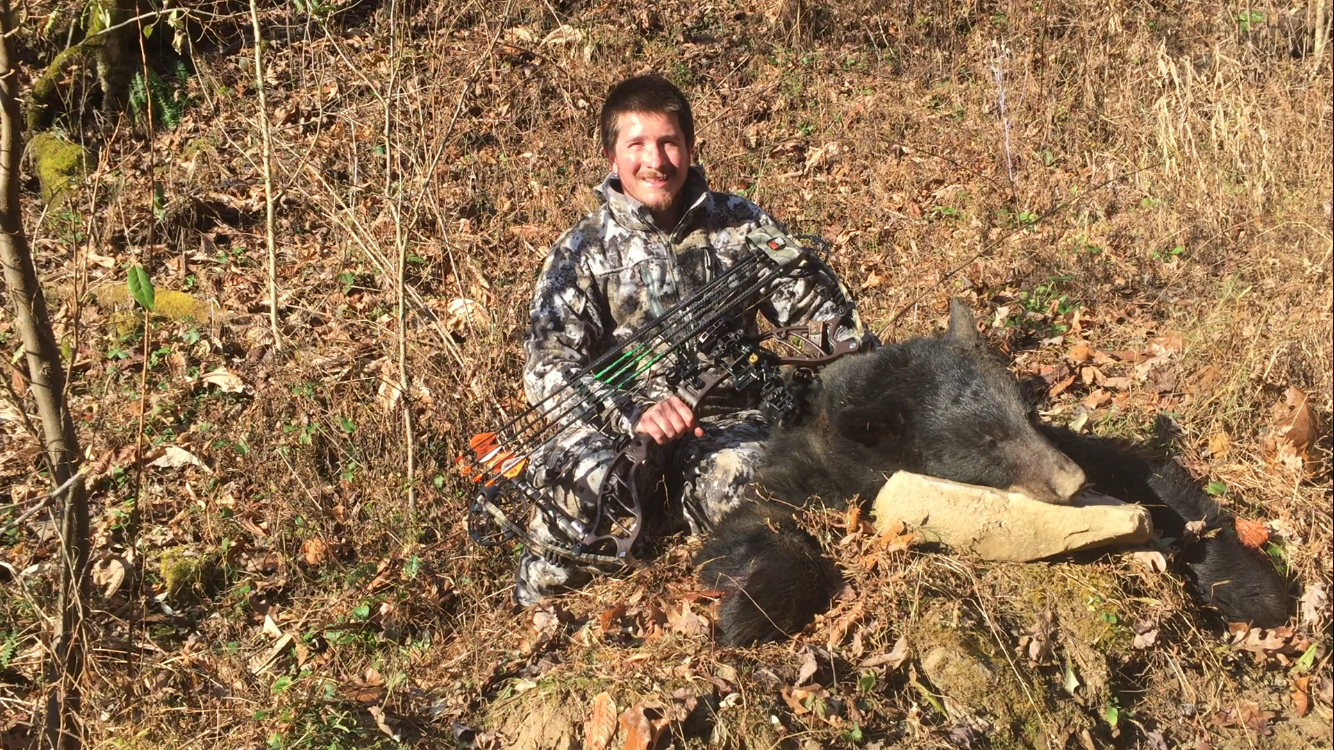
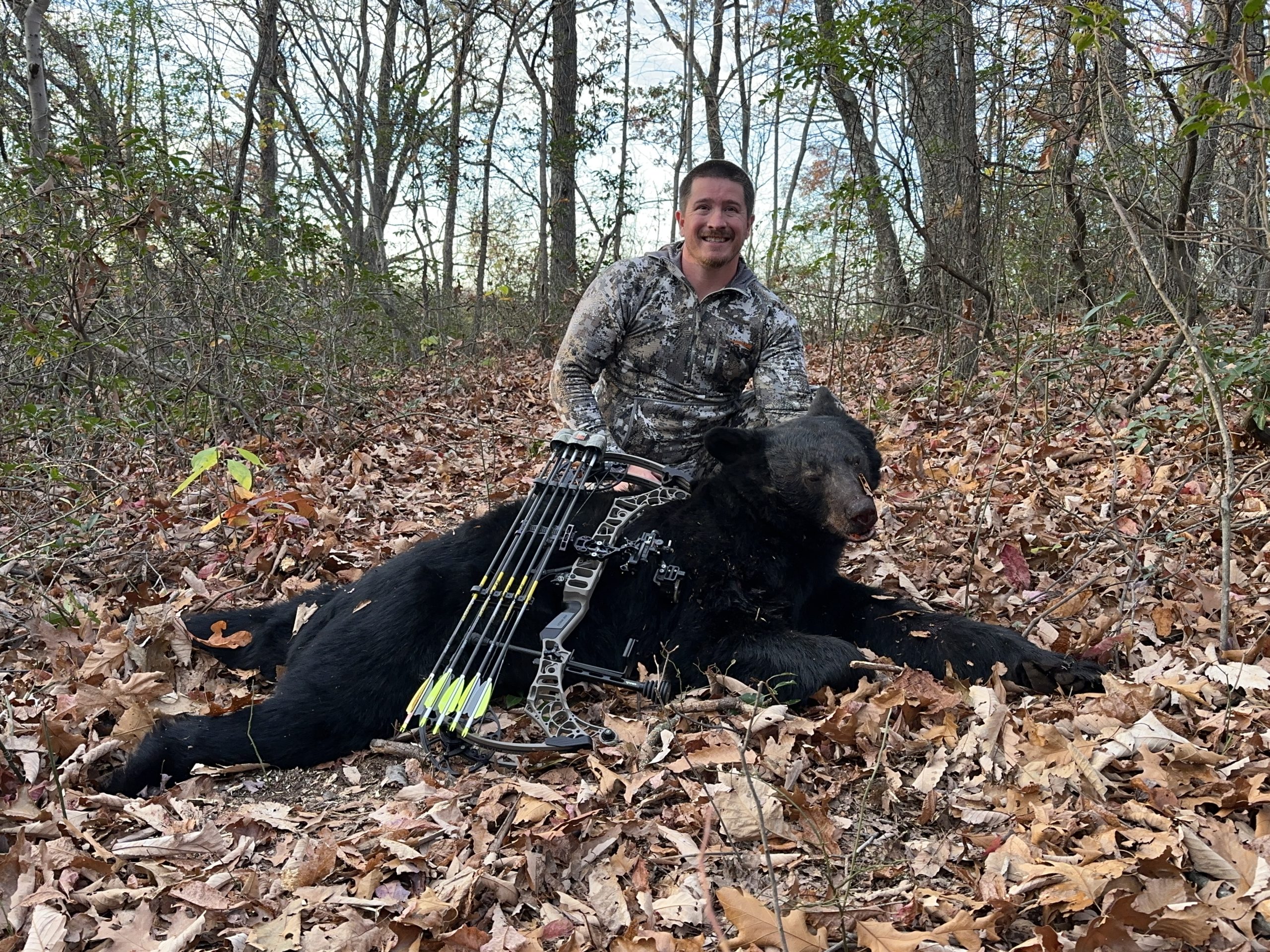
I’ve had the pleasure of harvesting multiple bears with a bow in years past and I’ve noticed a slight difference in blood-trailing bears compared to whitetails. Here are a few observations that I’ve made from tracking archery shot bears through the years that you should know before you shoot your first bear.
Shot Placement is KEY!
Sounds simple enough, to find find your bear, you first have to make a good shot. I think I had two opportunities to kill a black bear with a bow before I finally connected. Both arrows that were released were released with the intention to kill, but the arrow didn’t find it’s mark.
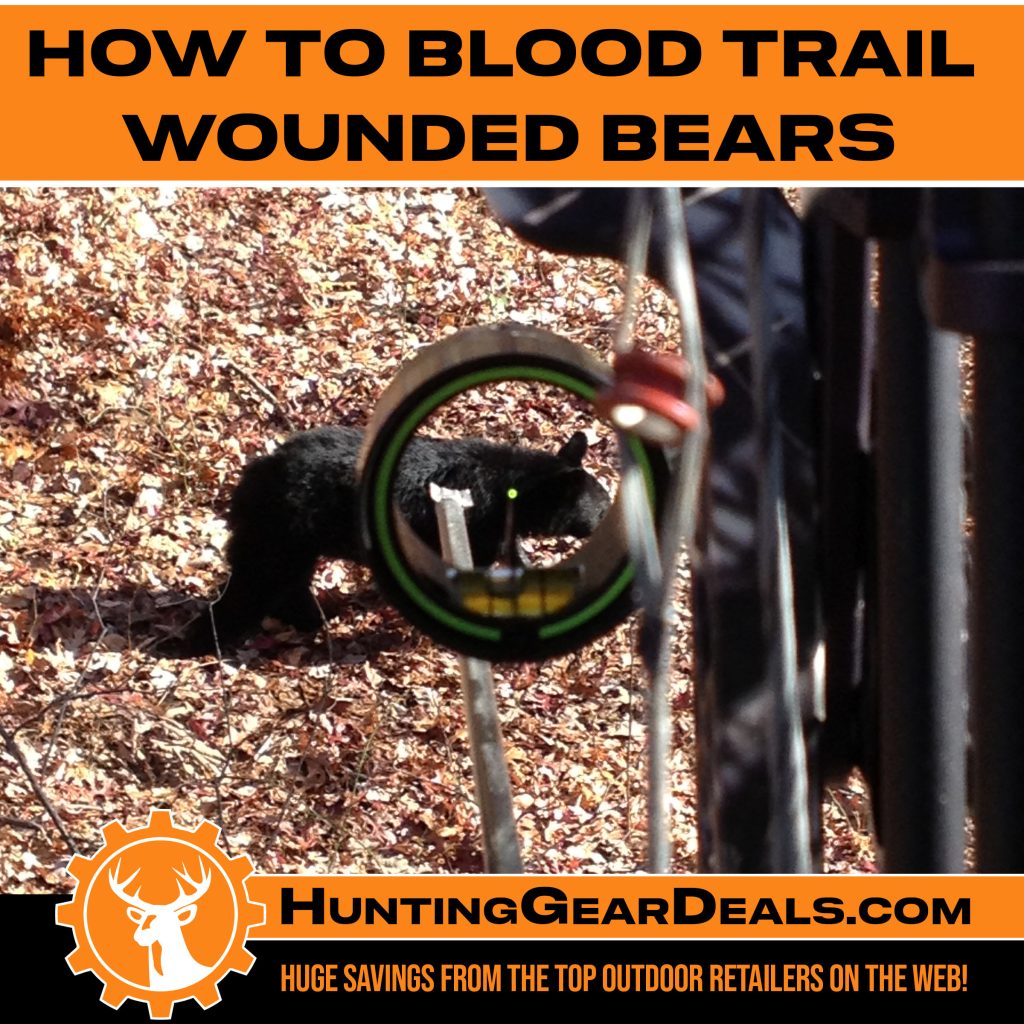
First, a bear’s hair is much thicker and longer than a deer’s. The long black fur is hard to distinguish at low-light and many hunters aim too low the firs time they shoot a bear. A bear’s fur can be up to 4″ long and this must be taken into consideration when aiming. Don’t overthink it and try to make a heart shot or anticipate a bear ducking your arrow so you try and compensate for the movement. Shoot the bear at center mass, behind the shoulder and you’ll recover the bear every time.
Speaking of the shoulder, avoid it at all costs! I lost my first black bear thanks to a mechanical broadhead hitting the shoulder on a steep downhill angle. It was my fault but I still think about that hunt and losing that bear. A fixed-blade broadhead is recommended but not required. I killed my bear this year with a 2 Blade Swhacker and Ive seen plenty of other bears killed with a mechanical broadhead through the years. Just remember, if you hit the shoulder, you’re not going to find your bear. Bears have larger, thicker bones than whitetail deer, so their shoulders are much harder to penetrate.
Variables That Might Effect a Blood Trail
There are severeal of variables that go into blood-trailing bears, so as you replay the shot in your head, answer the following questions.
- Did you get a pass through? A pass through will create and entry and exit wound, doubling the potential blood on the trail.
- If there is an exit wound, is it high or low on the body?
- Is the arrow still in the bear?
- How did the bear respond when shot? Did it run or walk away? (Most bears run away and many will spin around in circles after being shot)
- Is the diaphragm punctured?
- Did you hear a death moan?
When in doubt, back out and give the bear time to expire.
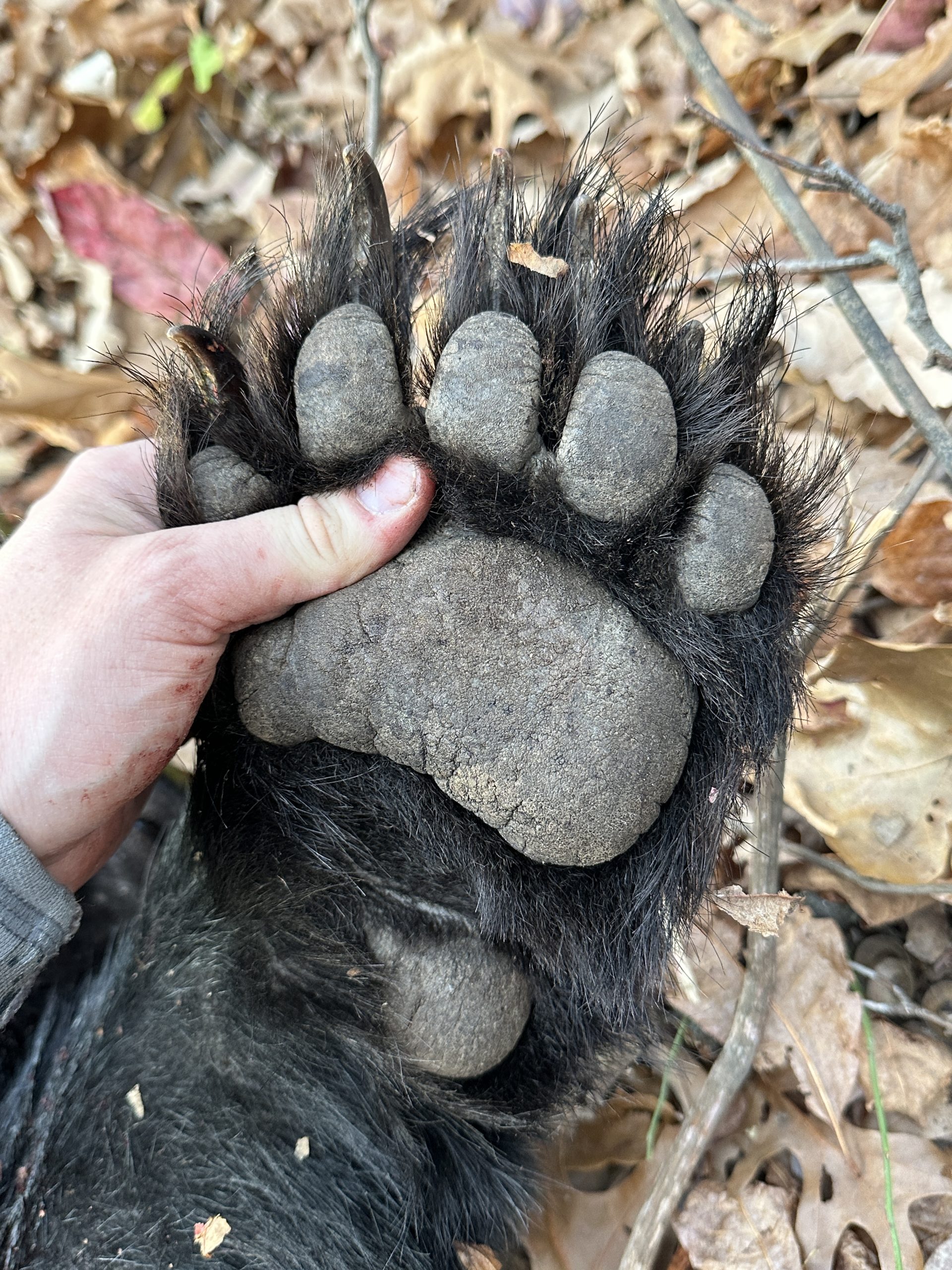
Long Hair Soaks Up Blood
Blood trails can be tough on poor shots because the bear’s fur will soak up a lot of blood after the shot. Having a full pass through will certainly make blood trails easier, but keep in mind that you might not be seeing blood because the bear’s hide is holding it in.
Large cutting broadheads can help create large enough holes to ensure this isn’t an issue, but shy away from mechanicals for the most part. When tracking, you might not find blood immediately, but as the bear’s hide gets saturated, it will be more distinct and sometimes close to the path that the bear took, instead of spread out further from the trial. Now, if you hit an artery and blood is squirting out from the bear, you might find blood several feet away from the path the bear ran.
Do Bears Run Further Than Deer After Being Shot?
From my experience, most bears do not run as far after the shot as deer. You can shoot a buck through both lungs and he’ll run full speed until he falls over, sometimes up to 150 yards on what seems like the perfect shot. If you shoot a bear through both lungs, it might spin around and react to an arrow hitting him as if it were another bear, then run only 30 or 40 yards before stopping to see what happened to him.
A well-placed arrow will put a bear down quickly, Here’s a video to prove it!

What is the Death Moan?
A bear’s death moan is a key indicator that will help you in the recovery process. One, it’s confirmation of a well-placed arrow and secondly, it provides a location as to where the bear is lying. Death moans can be erie and don’t occur every time, it’ll depend on the shot placement and how quickly the bear expires. I’ve killed a few bears in the past and the bears that died in seconds didn’t moan. The bears that ran out of sight and bedded down before expiring often let out a death moan.
It’s Time to Start Blood Trailing
Once the arrow has been released and you’ve waited at least 30 minutes after the shot (more time on liver and gut shots of course), you’ll want to pay attention to the trail. If you’re hunting a bait station where bears have a familiar path or trail, they’ll try to make it back to it if they can get their bearings (no pun intended).
As you look for blood, be sure to check above the forest floor. The fur of the bear will absorb a lot of blood, preventing it from hitting the ground, so don’t give up too easily. As the bear brushes against trees, leaves, and grass, blood is often left behind a 12 to 30 inches above the forest floor. A wounded bear can cover a lot of ground quickly, so pay attention to kicked-up leaves, or knocked-over saplings as the bear attempts to flee the area.
During the track, pause to scan the area in front of you, especially under logs and areas that a wounded bear could crawl into. One bear that I killed crawled into a brushy uprooted tree overnight and I nearly walked right by him before seeing it. Another bear that I watched run into a log pile had fallen inbetween two logs and was practically invisible from my vantage point as I approached the area.
Any wounded animal can become aggressive when wounded, so use caution when tracking a bear, deer, or any other game animal.
Hunting Gear Deals is funded by affiliate commissions. We may receive a small commission when you buy from our partners using the links provided. There is no additional cost to you. Thanks for supporting us by using our links when making your purchases.