early season archery guide

5 Killer Opening Day Deer Hunting Spots (Early Season Guide)

Opening day of archery season offers one of your best chances to tag a big buck—but only if you know where the deer are moving during daylight hours. Below are five of my most productive early season stand locations that continue to produce year after year. Whether you’re hunting public land, private food plots, or thick timber, these strategies can help you get it done when it counts.

There are several reasons why hunters find success on opening day, but the majority of the reasons come from patterning a specific buck.  At this time of the year, bucks are focused on food, water, and cover.  With the help of trail cameras, binoculars, and even bait piles, you can make this process much easier than ever before.

The predictability of a whitetail during this time of the year can be used in your favor to help you wrap your tag around a big buck on opening day.  The key to success during the early season is knowing when and where deer will be feeding, and with a little luck from Mother Nature, you’ll have a weather pattern that you can use to your advantage this season.
Why Opening Day Is So Productive

Opening weekend of archery season in many states falls right at a time of transition for the whitetail buck. Most seasons open in September or the beginning of October. In early September, bucks begin to rub their velvet off as testosterone levels start to rise.  Also, bachelor groups are breaking up and the whitetail woods are in disarray.  Bucks are shifting their behavior, and experienced hunters can take advantage.

At this point in the season, bucks are still very predictable. They’re primarily focused on food, and you can often catch them moving in daylight. With the help of trail cameras, binoculars, and (where legal) bait, it’s easier than ever to get a buck’s number before opening day.

Some states open extremely early. Florida, South Carolina, and Tennessee kick off in August, while Kentucky offers a highly sought-after velvet hunt in early September. If you’ve been scouting and a buck is killable, don’t wait. Patterned movement in the early season is a rare opportunity, and opening day might be your best chance.

1. Primary Food Sources

electric fence for deer hunting

Food plots and ag fields are your best bet for daylight buck movement.

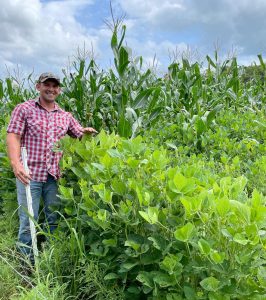
If you’ve patterned a buck on soybeans, clover, alfalfa, or even a legal corn pile, opening day is your green light. These food sources are often the most consistent for patterning deer during daylight hours.  Savvy trail camera users should be able to predict

Tips for Hunting Food Sources:

  • Glass from a distance in the evenings leading up to season
  • Use trail cameras to confirm movement times
  • Monitor weather patterns—cold fronts often push bucks to feed earlier

I typically wait for a cold front before diving in, but sometimes you have to strike while the iron is hot. If a buck is showing daylight activity, go for it—regardless of temperature. Don’t be afraid to burn a vacation day on a patterned buck.

Remember: food sources change quickly this time of year. Soybeans yellow, acorns drop, and feeding patterns shift. Capitalize on a hot spot while it lasts.

2. Water Sources

will deer cross a river

In hot, dry conditions, water can be the hidden honey hole.

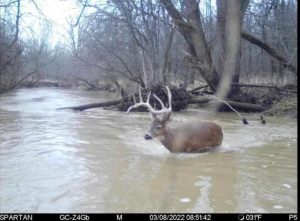
Just like us, deer need water every day. In drought years or during heat waves, water becomes a magnet for all wildlife—especially mature bucks that move minimally in daylight.  Locating water sources may seem simple, as in the hill country, water is typically at the bottom of creeks and ditches.  However, it’s usually those hidden water sources, whether it be a mudhole in an ATV trail or a natural spring in the head of a drainage.

One of the most surprising locations that draws in deer during the heat of hunting season went unnoticed for years.  I placed a trail camera on a large mudhole on the ridge to catch potential trespassers as they walked around it or drove along the edge.  To my surprise, there were bucks everywhere!  There weren’t a ton of tracks in the area, but the trail camera photos revealed way more than I ever realized.  I utilized this information to hang a treestand the following season, and I killed a buck nearby.

Why water works:

  • Deer are drawn to the few remaining water sources in dry areas
  • Less pressure near water than field edges
  • Easy to identify quality working
  • Great location for trail cameras and rut activity too

In my home state of West Virginia, we recently experienced one of the worst droughts in two decades. Water holes dried up, and deer vanished from spots I had hunted for years. It was a hard lesson that water is just as critical as food.  The lack of water in an area will drive out deer from the area, and you can do your part as a wildlife manager by providing or creating water sources to enhance your property.

If you don’t have a good water source, consider creating one with a small pond or portable tank. In the early season, a reliable water hole could be your ace in the hole.

3. Staging Areas

maven optics spotting scope best price

Staging areas are transition zones where bucks wait before entering open food sources.

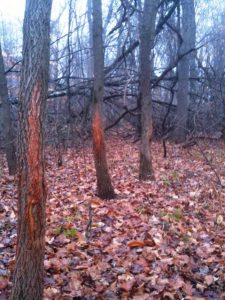
These spots are usually located between bedding cover and primary food sources. Deer hang out here, feeding lightly and observing their surroundings until it’s safe to move into the open.  You’ll often find rubs and scrapes in this area as hunting season approaches.  There’s a hidden primary food source on one of my favorite hunting tracts in West Virginia.  Hunting the food source is nearly impossible due to how thick it is, but it’s a deer magnet that only produces for the first couple of weeks of the season.

The buck sign located just inside the timber is where I filmed my buddy arrow his biggest buck ever.  This staging area was full of rubs and scrapes, making it is easy to determine that this spot was an ideal ambush point to target a big deer.  However, it took us several seasons to figure out this pattern, as we were usually reacting to the sign too late, after the palatability of the food source was diminished.  This staging area has turned into my favorite early-season stand site and produces some of the best trail camera photos of the season.  Every buck on the property eventually walks through this area before hunting season begins, allowing me to take inventory of the local deer herd as the season approaches.

How to identify staging areas:

  • Found between bedding and major food
  • Contains rubs, scrapes, and browsing sign
  • Often on oak flats, thickets, or inside corners of fields
  • Typically, areas that give a deer an advantage, either at a higher elevation to observe the primary food source or downwind of it.  Then there’s dropping thermals in the evening to contend with as well.

One trick I use is placing a corn pile (where legal) about 75–100 yards off a field edge in thick cover. This creates an artificial staging area, giving bucks a place to pause before committing to the open field.  If the area become a magnet, I’ll add a mock scrape to the area and keep the camera running all summer long!

In states where baiting isn’t legal (especially public land), you’ll need to find natural staging cover. Persimmon trees, early dropping acorns, or soft browse in secluded pockets are key. Fresh deer droppings are a dead giveaway that deer are spending time there. Bucks often use these areas to monitor the behavior of does or young bucks in the field. If the coast is clear, they’ll follow. If not, they may wait until after dark.

4. Observation Hunts

Observation sits help you scout while hunting—and sometimes land a surprise shot.

Setting up in a location with a wide field of view, either from the ground or a treestand, allows you to gather real-time intel. You might not plan to shoot, but be ready, because anything can happen.  It may seem like a lot of work to hang an observation stand that simply allows you a better vantage point of the area instead of a shot opportunity.  However, a good observation stand can reveal all of the secrets that you need to know to go in for the kill.

Observation Hunt Tips:

  • Glass open fields, such as soybean, alfalfa, or clover fields in the evenings
  • Sit in an elevated position for the best line of sight
  • Use a saddle or lightweight hang-on for mobile setups
  • Stay far enough away not to spook game, including your access routes to and from
  • Pay special attention to wind direction and thermals

I’ve done many observation sits from high points or fence lines to avoid disturbing deer. Sometimes I’ll even bring a lightweight saddle and platform to climb a tree just for a better view.  It’s an important in-season scouting method that has a lot to offer.

One of my buddies once tagged his biggest buck on an “observation sit.” He hung a stand just to scout the field, and that evening, the buck stepped out 30 yards away. His idea of an observation stand may have been a little too close, but this lack of preparation and scouting worked in his favor.  He got lucky, but he was also prepared to get lucky.  He had his bow and hunting gear in place, and the unexpected became reality really quickly!

5. Trails That Parallel Primary Food Sources

Parallel trails give bucks a way to scent-check fields from a safe distance.

Mature deer rarely enter open fields without checking the wind. They often walk a trail 30–60 yards off the field edge on the downwind side. These trails are gold if you can locate them.  It’s tough though.  Sometimes you get lucky and catch a buck cruising through the background of a trail camera or stumble upon a large track in an overlooked area.  The best way is through observation sits though.

How to hunt parallel trails:

  • Identify the dominant wind direction for a field
  • Find trails 30–50 yards inside cover on the downwind side
  • Set your stand downwind of those trails—not the field itself

On my Ohio property, the fields sit atop ridges, and the timbered slopes below contain several parallel trails. On calm days, thermals and rising winds can cause your scent to blow over these trails without detection. It’s a killer setup.  However, during the 2024 season, I was hunting a large buck that didn’t enter the field like any other deer.  I had multiple trail cameras around the edges of the field near areas where most of the deer entered and exited the field.  However, it wasn’t until I moved trail cameras around that I found the way he entered the field.  His unique approach allowed him to circle downwind of 75% of the field before entering, but we eventually crossed paths during the late season.

These trails are hard to pattern and even harder to see without boots on the ground. But when you find one with fresh sign, mark it and hang a set nearby—you may catch a cruising buck scent-checking the area before sunset.

Final Tips for Opening Day Success

will trail cameras spook deer

Opening day is just around the corner, so get your gear together and get after it!  You should be running trail cameras, glassing ag fields, and studying historical data to help you zero in on this year’s target buck!  No matter which of these stand sites you choose, remember the golden rules of early season hunting:

  • Hunt when conditions are right: wind and weather
  • Use trail cameras and glassing to pattern movement
  • Keep pressure low—enter and exit with stealth
  • Be mobile: adjust based on the latest intel
  • Stay scent-free as best as possible.

Opening day is your chance to capitalize before deer feel hunting pressure. If you’ve got a buck patterned, now is the time to move in and get it done.  Don’t hesitate to burn a vacation day from work if the conditions warrant it.  A slight cold front during the first week of archery season is ideal to put a big buck on the ground.  In fact, a previous study that I conducted in West Virginia proved that opening weekend was just as good as any day during the rut in November!  More to come on that in a future blog post.

Good luck this season—and if you punch your tag early, be sure to send us your photos. We’d love to feature your success on HuntingGearDeals.com!

Hunting Gear Deals is funded by affiliate commissions. We may receive a small commission when you buy from our partners using the links provided. There is no additional cost to you. Thanks for supporting us by using our links when making your purchases.

Most Popular

Menu