I’m a bit of a base-layer fanatic, which probably isn’t so strange for those who read these articles. But having the right base layer for your outdoor adventures makes a big difference to your comfort level. When you’re actively moving, you want something lightweight, breathable, and moisture-wicking so you can stay dry and comfortable. But when you need to spend long time periods motionless in cold conditions (such as deer hunting or duck hunting), those base layers won’t cut it. You can wear some very heavy-duty, polar fleece base layers, but walking even a short distance in these will have you sweating in no time. That’s why I was intrigued with heated base layers from Fieldsheer. By combining relatively lightweight material with the ability to electronically heat your body, I figured it could be a good solution. Here are some thoughts on the Fieldsheer heated base layers.

Fieldsheer Merino Heated Baselayer Pant
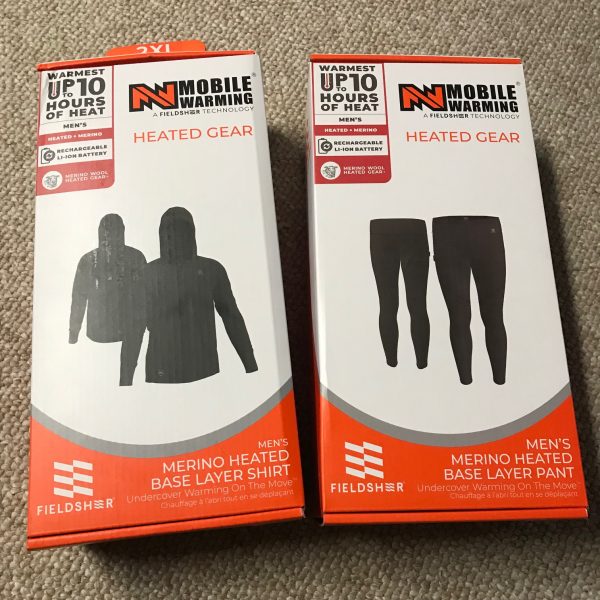
Fieldsheer’s® Merino Heated Baselayer Pants are powered by a Powersheer™ Standard rechargeable Lithium-Ion battery, which delivers up to 10 hours of effective heating comfort supported by a universal USB charging port.
Price: $179.99
• Bluetooth Control
• Sweatsheer
• 10 Hours of Heating
Fieldsheer Heated Base Layers Materials and Design
I was able to test out the Merino Heated Base Layer Pant and Merino Heated Base Layer Shirt. Both garments are constructed from merino wool, which is a great material for base layers. It’s naturally very breathable to let your body stay dry from sweat, but it’s also somewhat insulating for a relatively thin layer. The shirt has a quarter zip top with a hoodie, and the arms have cuffed thumbholes to keep the sleeves in place.
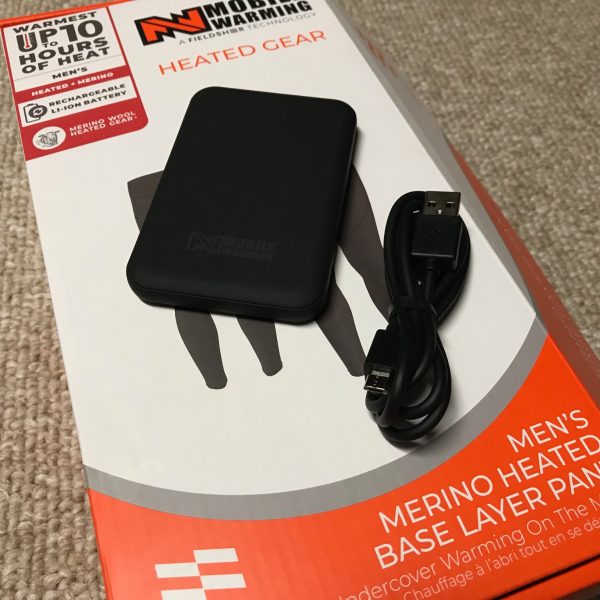
There are multi-zone heating elements woven within the garments, which can be turned on with a simple button on the garment or via Bluetooth connection using their MW Connect™ app. There are four different heat settings (low to high) and it can provide low heat for up to 10 hours on a single charge. The 7.4-volt, rechargeable, Lithium-Ion battery measures 2×4” and each garment comes with a zippered pocket to contain it. The battery can be charged via a USB connection.
Fieldsheer Heated Base Layers Sizing and Fit
Because base layers are meant to be worn against your skin, I wanted the fit to be right. After all, if the heating elements aren’t relatively snug against your chest or legs, they’re probably not doing their best job. According to the Fieldsheer website, the garments are reported as having an athletic fit, which again makes sense for base layers. As such, they recommend ordering a size up if you’re between sizes. They also have a size chart so you can compare your measurements and see which one would be best.
The base layer pants are relatively true to size. I normally wear a Large pants with a 36” waist, so I ordered an XL. It fit well around the waist and is long enough as well. But the base layer shirt sizing could be improved. I normally wear an XL shirt with 45” chest, so I ordered a 2XL per their guidance. The sleeves are about the right length and the chest fits well. But the shirt feels short on my torso and the bottom of the garment is extremely baggy (not an athletic fit whatsoever). Luckily, the heating elements are on the top side of the shirt, where they stay in contact with the skin. But all the extra fabric at the bottom bunches up when you add layers on top and the shirt can ride up while moving. The contoured hoodie is a bit small, as well, and doesn’t serve much of a purpose.

Fieldsheer Heated Base Layers Testing
Over a cold Minnesota winter, I tried these garments repeatedly to get an idea of how well they worked. From hunting to ice fishing to hiking in subzero temps, I put them through the wringer.
While sitting relatively still out ice fishing, I very much appreciated the heating elements. Keeping them close to the skin under other insulating layers and a wind-proof shell really lets you warm up your core quickly. Because I was wearing numerous layers, pushing the button on the garment is not an easy option. While you can use the MW Connect app to adjust the heat on the garments, you have to manually turn the battery on first, which isn’t ideal. But from then on, the app easily finds your connected garments and you can adjust the heat settings from your phone.
In terms of battery life, I’m impressed. I have left the clothing with a fully charged battery to sit for months. When I turned them back on, the battery was still at least 75% charged.
The parts of the garments without heating elements (lower legs and stomach region) are obviously a bit more exposed. The merino wool construction is fairly thin overall, so when you’re holding completely still for a long time (such as deer hunting), these areas will definitely still get cold unless you have other insulation.
Fieldsheer Heated Base Layers Review Summary
After lots of testing, I think the base layers do their job fairly well and accomplish their intended purpose. When you’re just running errands on a frigid winter day or going to a late fall football game (both where you will be somewhat active), the heated elements can help you stay warm without overdressing. But when you’re going to be sitting still for long time periods (such as while hunting), I would just opt for warmer base layers. Managing my sweat level via layering while active just seems to work better for me than relying on thinner but heated base layers like these.
PROS:
CONS:
Ready to buy? Fieldsheer sells direct to consumers or you can pick some up from The Warming Store.
Thanks to Ryan Lisson for writing this unpaid review. and to Fieldsheer for providing the heated garments for evaluation. Hunting Gear Deals is funded by affiliate commissions. We may receive a small commission when you buy from our partners using the links provided. There is no additional cost to you. Thanks for supporting us by using our links when making your purchases.
 AUTHOR BIO
Ryan Lisson is a biologist, outdoors author, and hunter/angler from Minnesota. He’s a regular content contributor to several outdoor brands and magazines and focuses heavily on recruiting and mentoring new hunters through his website Zero to Hunt. If he’s not hunting or writing, you’ll often find him hiking with his wife and two children.
Instagram- @zero_to_hunt Facebook- @zerotohunt